
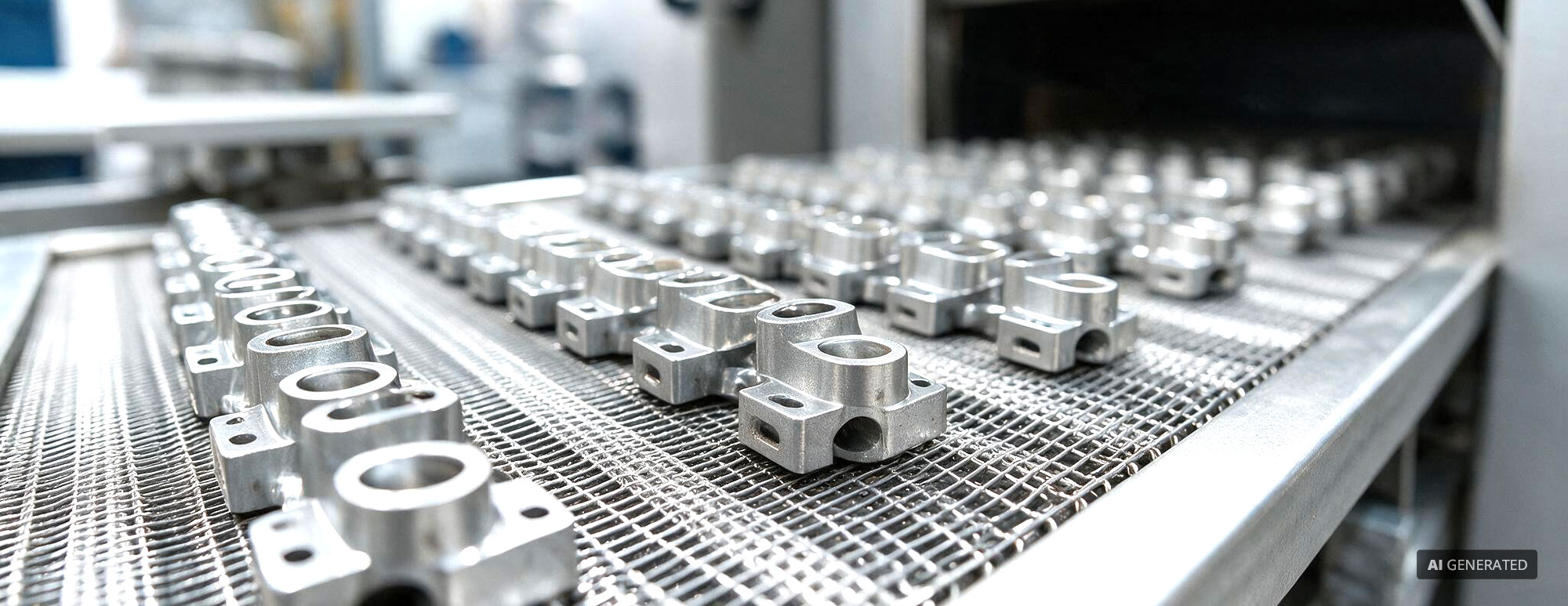
What You Need to Know About the Metal Injection Molding (MIM) Process
Definition – What Is the MIM Process?
The MIM (Metal Injection Molding) process, also known as metal powder injection molding, is a modern powder metallurgy process used to manufacture complex metal components. It enables the production of intricate mechanical components with complex geometries, high dimensional accuracy, and good surface quality—components that often require considerable effort to produce using conventional metalworking methods.
Whether in medical technology, electronics, the automotive industry, or mechanical engineering—metal powder injection molding offers a wide range of applications for precision functional parts. Depending on the requirements, various materials such as stainless steel, low-alloy steels, and other metal alloys can be used.
The MIM Process, Step by Step

Initial Contact and Project Consultation
Every MIM project begins with a personalized consultation. Together, we analyze your technical requirements, the desired part geometry, and the operating conditions of your metal components. This allows us to lay the foundation for a suitable manufacturing solution using metal powder injection molding.

Quote and Technical Coordination
Based on your requirements, we assess the technical feasibility of your project and prepare a customized quote. In doing so, we take into account factors such as material selection, component complexity, tooling costs, planned production volumes, and delivery dates.

Tooling for Metal Powder Injection Molding
A precision injection mold is crucial for the quality of the resulting MIM components. The mold is designed and manufactured based on the component geometry and the defined production parameters. Modern manufacturing technologies and optimized process parameters ensure consistent component quality.

Mixing and Injection Molding
In the MIM process, fine metal powder is mixed with a binder to form a homogeneous mass, known as feedstock. This feedstock is then injected under pressure into the injection mold. The resulting green part already has the desired component geometry and serves as the basis for the subsequent manufacturing steps.

Debinding of MIM Components
During debinding, the binder is removed from the green part in a controlled manner. Depending on the material system used, chemical, thermal, or combined processes are employed. Precise process control is crucial for maintaining dimensional stability and optimally preparing the component for the subsequent sintering process.

Sintering and Compaction
During sintering, the debound components are treated at high temperatures, but below the metal’s melting point. In this process, the metal particles bond together, the component is compacted, and it acquires its essential mechanical and physical properties. At the same time, the final dimensions are established through the controlled sintering process.

Quality Inspection and Final Inspection
After sintering, the MIM components are inspected according to defined quality criteria. Depending on the requirements, this includes checking dimensional accuracy, tolerances, surface finish, and relevant material properties. This ensures that the manufactured metal components meet the agreed-upon specifications.

Post-processing and Surface Finishing
Depending on the intended application, the sintered MIM components can undergo additional post-processing. This includes, for example, machining, surface treatment, or other customer-specific processing steps. The goal is to meet the functional, aesthetic, and technical requirements of the respective component.

Packaging and “Free Delivery”
Once quality inspection is complete, the finished MIM components are securely packaged for transport and prepared for shipment. LLOYD Industrial Parts coordinates delivery in accordance with the agreed-upon requirements and supports you in reliably integrating your metal components into your production processes.
Questions and Answers About the MIM Process
In which industries is the MIM process used?
The metal injection molding (MIM) process is used in the automotive industry, medical technology, aerospace, and electronics, among other fields. It is particularly well-suited for complex metal components with intricate geometries, tight tolerances, and high functional requirements.
What advantages does MIM offer over other manufacturing processes?
The MIM process enables the cost-effective production of complex metal components with a high degree of design freedom and good surface quality. Additional advantages include efficient use of material, good reproducibility, and minimal need for machining. Metal powder injection molding can be a cost-effective alternative to other metalworking processes, particularly for medium- to large-volume production runs.
Which metals and materials can be processed using the MIM process?
Various metal powders and alloys are suitable for metal powder injection molding, including stainless steel, low-alloy steels, nickel and cobalt alloys, and copper-based materials. Titanium and other specialty materials can also be processed under appropriate process conditions. The selection depends on the mechanical, thermal, and chemical requirements of the specific component.
Are MIM components just as durable as conventionally manufactured metal parts?
Depending on the material and process parameters, MIM components can achieve mechanical properties comparable to those of conventionally manufactured metal components. Key factors include the achievable density, heat treatment, and the alloy used. Through optimized process control, components with high strength values and good performance characteristics can be produced.
What types of post-processing are possible for MIM components?
Depending on the material and application, MIM components can be adapted to their specific requirements using various post-processing methods. These include surface treatments such as vibratory finishing, sandblasting, electroplating, or painting, as well as machining processes such as turning, milling, drilling, grinding, and reaming. Thread cutting and other machining steps are also possible. LLOYD Industrial Parts can assist you in selecting the appropriate post-processing steps for your application.
What component sizes and weights is MIM suitable for?
Metal powder injection molding is particularly well-suited for small and medium-sized precision components with complex geometries. Cost-effective production is possible, among other things, for components weighing approximately 0.1 to 200 grams. The actual achievable dimensions and weights depend on the component geometry, the material, and the technical process limits.
How long does it take to manufacture MIM components?
The production time for the MIM process depends on several factors, including component complexity, mold design, material selection, and the planned production volume. In particular, the development and manufacture of the injection mold influence the project duration. To provide a realistic estimate of delivery times, LLOYD Industrial Parts reviews your specific project requirements.
At what minimum order quantities does the MIM process become cost-effective?
The MIM process is particularly well-suited for medium and large production runs. Although there are initial tooling costs, these can be recouped for higher production volumes through efficient manufacturing processes and low unit costs. Whether metal powder injection molding is cost-effective for your project depends on the part geometry, the material, the amount of post-processing required, and your annual demand.